

Vulnerabilities & Inequalities
Vulnerabilities & Inequalities
This chapter provides details on the vulnerabilities faced by children and young people across Central Bedfordshire. It includes the number of children and young people affected, demand on services and priority areas for action across five categories of vulnerability. These are: domestic abuse, children and young people in need of help and protection, children in care, young carers and unaccompanied asylum-seeking or refugee children and young people. An executive summary and the full report can also be download below.
CB-vulnerabilities-full-report-final-1CB-vulnerabilities-Exec-summary-final-2
Health inequalities of children and young people
Vulnerabilities can have a strong relationship to, and be made worse by, the health inequalities experienced by local children and young people (CYP). The previous chapters of this section provide an overview of local health inequalities during the first three stages of CYP’s lives and prioritise areas for action to prevent and limit their impact. Overall, the health and wellbeing of CYP in Central Bedfordshire is generally similar to other local authority areas with similar (i.e, the lowest) levels of deprivation. However, there is significant variation in outcomes within the area, where some groups of CYP have significantly worse health outcomes than others. Whilst it is not inevitable that CYP with vulnerabilities identified across the rest of this chapter will experience greater health inequalities, they could be at greater risk. Further details, including a Data Dashboard and Executive Summary, are available via Children & Young People | Central Bedfordshire JSNA.
Domestic abuse
The Domestic Abuse Act 2021 defines domestic abuse where, in a context involving two people aged 16 or over and personally connected to each other, one person conducts abusive behaviour against another. Abusive behaviours include physical or sexual abuse, violent or threatening behaviour, controlling or coercive behaviour, economic abuse, and psychological, emotional, or other abuse.
The Domestic Abuse Act 2021 established children living with domestic abuse as victims in their own right due to the long-lasting impact it can have. It is hard to over-state the impact of domestic abuse and the following is summarised from Central Bedfordshire Council’s Domestic Abuse Safe Accommodation Needs Assessment[1]. For many victims/survivors, and their families and children, the impact can be life-long and take mental, emotional, physical, social, and financial form. Ultimately, there is a risk of fatality from domestic abuse through homicide or suicide, relating to both victims/survivors of domestic abuse[2] and amongst male perpetrators of domestic abuse[3]. In the UK alone, at least one woman a week and two men a month are killed by a current or former partner.
Physical impacts can include all injuries, sexually transmitted infections, or chronic health conditions, whilst emotional impacts can cause harms like suicidal ideation or self-harm, that may continue long after the abuse has stopped. Domestic abuse can also lead to homelessness or threats of homelessness, and impact on employment, particularly where victims/survivors must take time away from paid employment or caring responsibilities.
Living in a home where domestic abuse happens can have a serious impact on a child or young person’s mental and physical wellbeing, and this can continue after the adults’ relationship has come to an end (e.g., post-separation abuse, coercive control). Living with domestic abuse is considered an Adverse Childhood Experience (ACE), with children and young people also more vulnerable to targeting by gangs who might coerce them into criminal activities or exploitation. Victims/survivors of domestic abuse living in rural areas like Central Bedfordshire can also be more physically and geographically isolated and might experience abuse for longer due to their isolation and the difficulty of accessing the support they need. In 2019 the Home Office estimated that the total cost of domestic abuse, including the impacts above, plus costs to many services (e.g. health, housing, social services, employment, criminal justice) involved, amounted to around £66 billion[4] in England and Wales for 2016/2017.
What is the level of need (domestic abuse)?
There were 2,142 incidents of domestic abuse reported to Bedfordshire Police in 2023. However, domestic abuse is often a hidden crime with police data only providing a partial picture of the actual level of domestic abuse experienced (ONS, 2023)[5] , as explored in the following sections.
Multi-Agency Risk Assessment Conferences (MARAC)[6] are meetings where information is shared on the highest risk domestic abuse cases between representatives of local police, health, Children’s Services, Adults’ Services, housing practitioners, Independent Domestic Violence Advisors (IDVAs), probation, and other specialists from the statutory and voluntary sectors. Options to increase the safety of those involved are reviewed and used to inform a co-ordinated action plan. The focus of the MARAC is to safeguard and make links with other agencies to safeguard children and manage the behaviour of the perpetrator. At the heart of a MARAC is the working assumption that no single agency or individual can see the complete picture of the life of a victim, but all may have insights that are crucial to their safety. The victim does not attend the meeting but is represented by an IDVA who speaks on their behalf. In Central Bedfordshire MARAC meetings are held once a month:
Table 1: Breakdown of MARAC cases by number, age and household
| Year | Total number of victims | Of total, victims are aged 16/17yrs | Number of children in household* |
|---|---|---|---|
| 2018–2019 | 314 | 5 | 421 |
| 2019–2020 | 376 | 5 | 457 |
| 2020–2021 | 383 | 7 | 452 |
| 2021–2022 | 383 | 7 | 468 |
| 2022–2023 | 303 | 1 | 473 |
| 2023–2024 | 415 | 3 | 570 |
*Please note that some children may have been counted twice if there has been a repeat referral for the victim.
Breakdown of domestic abuse activity
The activity undertaken in Children’s Services (child and family assessments, referrals, early help assessments, and child protection plans), MARAC, adult safeguarding cases, housing approaches, and police incidents has been broken down as below. Each dataset only includes activity where domestic abuse was a factor. The level of activity from each source varies greatly. The figures below show activity (assessments, cases, incidents) in Central Bedfordshire where domestic abuse was a factor for the 12 months ending 31st December 2023:
- 361 MARAC cases
- 15 Adult safeguarding cases
- 505 housing approaches
- 2,142 police incidents reported
It should be noted that there are relationships between each of these activities, therefore some of the cases for different services will include the same individuals/families. Across all activities, local data illustrates the significance of gender.
Table 2: Summary of 2023 case %/numbers by female/male gender
| Source | Female | Male |
|---|---|---|
| MARAC cases | 96% | 4% |
| Adult safeguarding cases* | N/A | N/A |
| Housing approaches | 88% | 12% |
| Police incidents | 76% | 24% |
Domestic abuse service challenges
Funding for domestic abuse services can be short-term and based on grant funding that can make it difficult to provide robust, stable, and sustainable services. For example, this approach does not allow for critical support at early intervention and prevention stages, because most funding is utilised for high risk/critical intervention services. Where possible, DA local partners work together on submitting service bids to funding providers to increase the response to those who need support.
Research[7] has also found that people who identify as being Lesbian, Gay, Bi-sexual, Transgender + (LGBT+) and experience domestic abuse are less likely to seek support from services. In a joint piece of research with Galop, a leading national LGBT+ anti-abuse charity, the Council has developed a needs assessment that is now being incorporated into the commissioning service plans and is establishing a local support group for LGBT+ individuals experiencing domestic abuse.
There is limited play therapy available for children who have grown up/are in a household where there was/is DA. A pilot play therapy and counselling provision for children who are deemed to be in safe accommodation is in place, but the national government criteria for ‘safe accommodation’ means not all children living with domestic abuse can access specialist, therapeutic support.
There are gaps in services and particular challenges for supporting people experiencing mental health issues exacerbated by living with domestic abuse. This affects both victims and perpetrators of domestic abuse, and children and young people living with abuse in the family home. If someone with no resource to public funds (NRPF) is fleeing a DA relationship there are national charities to support them in areas like immigration, finance and housing, but there are limited local services available in Bedfordshire.
Impact of COVID-19 (Domestic abuse)
During national, COVID-19 lock-down periods local awareness of domestic abuse increased due to higher levels of media coverage. Central Bedfordshire Council provided regular, resident emails about what abuse was, and how to seek support, and social media channels (Facebook and Twitter) also provided regular information. National and local service providers saw a huge increase in the number of individuals seeking support.
During lockdown in Central Bedfordshire where a victim and perpetrator live together there were fewer opportunities for the victim to seek spaces of safety and for the perpetrator to be challenged on their behaviours. This led to increases of risk and harm to the victim and others within the abusive household; the following table summarises the average monthly number of approaches to Housing Solutions related to domestic abuse.
Table 3: Housing solutions cases relating to domestic abuse
| Year | Average number of approaches per month |
|---|---|
| 2018–2019 | 12 |
| 2019–2020 | 18 |
| 2020–2021 | 21 |
| 2021–2022 | 53 |
| 2022–2023 | 366 |
Bedfordshire Voluntary and Charity sector partners saw large increases in referrals and disclosures of abuse from autumn into winter 2020, and then again in spring 2021. During the two lock-down periods, the number of high-risk cases being referred to the MARAC remained consistent with pre-COVID-19 levels, but this was against a backdrop of fewer services operating face-to-face contact with victims. In 2022-23 there was a large increase in approaches to housing generally, however the increase in DA approaches was broadly similar to the previous year. The increase in housing related cases for this period is likely because of a change in process and clearer recording of DA in housing applications, not an increase in DA incidents overall.
Priority areas for action (domestic abuse)
The Domestic Abuse Strategy for 2022 – 2025[8] outlines the Council priorities for responding to domestic abuse as required by the Domestic Abuse Act 2021. Current service priorities for children and young people are:
- Play therapy offer for all children living in Refuge accommodation
- The appointment of two KIDVA (Children’s Independent Domestic Violence Advocates that work with children living with high-risk domestic abuse to understand their experiences, create safety plans and advocate on their behalf.
- Work with schools across Central Bedfordshire to deliver the RSHE curriculum and training, awareness raising, and signposting offer.
Children and Young People in need of help and protection
Most children and young people in Central Bedfordshire live healthy and safe lives but some vulnerable children are at risk of poorer health and wellbeing outcomes. A statutory framework underpins the safeguarding responsibilities of every agency and professional in respect of interventions to safeguard children (Working together to Safeguard Children). Each local authority is also required to establish a Local Safeguarding Children Board (LSCB) for their area (Section 13 of the Children Act 2004) whose overarching objectives are to coordinate, monitor and evaluate the activities of LSCB agencies. Certain agencies also have a statutory duty (Section 11 of Children Act 2004) to co-operate to safeguard and promote the welfare of children and these include local authorities, NHS services, police, probation services and young offenders’ institutions.
Children in need are a legally defined (Children Act 1989) group of children assessed as needing help and protection as a result of risks to their development or health. This group includes children subject to Child In Need Plans, Child Protection Plans, children in care, young carers, and disabled children. Children in need also include young people aged 18 or over who continue to receive care, accommodation, or support from Children’s Services, and unborn children. If a social work assessment has recommended a Child In Need plan then support from Children’s Social Care will be offered to the family using multi-agency approaches based on the Working Together to Safeguard Children 2023 (HM Government, 2023[9]) statutory guidance.
What are the main risk factors?
Often risk factors occur together, particularly for children living in families affected by parental mental illness, substance misuse, and domestic violence. Over a quarter (26%) of babies in the UK have a parent affected by one of these issues (Wave Trust 2015[10]) but other key issues resulting in the need for social care support and intervention include abuse and neglect, missing children, and child sexual exploitation.
What is the level of need (CYP help & protection)?
A child in need is defined (Children Act 1989) as a child unlikely to achieve or maintain a reasonable level of health or development, or whose health and development is likely to be significantly or further impaired, without the provision of services; or a child who is disabled. A child can have more than one episode of need throughout the year, but episodes should not overlap. If a child has more than one episode, each is then counted – see figures below.
In Table 4 below the overall numbers of children in need in Central Bedfordshire has increased in recent years but in the last two years the average rate per 10000 children remains lower than across the East of England region (245) and England (343). Children who are subject to a child protection plan have been identified as at risk of abuse and/or neglect and there is strong evidence this has a detrimental effect on their physical and mental health. In Table 4 below the rate of local children in need subject to child protection plans has returned to a level similar to before the pandemic, i.e. higher than the East of England region average but below the England average.
Table 4: Trends in Children in Need in Central Bedfordshire, regionally and nationally[11]
| Trend | 2018 | 2019 | 2020 | 2021 | 2022 | 2023 |
|---|---|---|---|---|---|---|
| Number of children in need at 31st March | 1,356 | 1,382 | 1,277 | 1,261 | 1,461 | 1,481 |
| Rate of Children in Need at 31st March (per 10,000 children under 18 years) | 220.7 | 221.1 | 200.6 | 193.4 | 227.9 | 231.0 |
| Number of Child Protection Plans at 31st March | 223 | 188 | 155 | 146 | 221 | 212 |
| Rate of Child Protection Plans at 31st March (per 10,000 children aged under 18 years) | 36.3 | 30.1 | 24.3 | 22.4 | 34.5 | 33.1 |
| Regional rate of child protection plans at 31st March per 10000 children aged under 18 years | 29.0 | 27.7 | 26.3 | 26.2 | 26.8 | 27.1 |
| National rate of child protection plans at 31st March per 10000 children aged under 18 years | 45.3 | 43.7 | 42.8 | 41.4 | 43.3 | 43.2 |
Local demographic data for children in need are unavailable but the latest national data in Table 5 below suggests trends by gender, age range and ethnicity. Table 5 reports a slight fall in the under- 10 years population alongside an increase for older children, particularly 16 years+. Central Bedfordshire remains less diverse than England overall (90.2% from White ethnic groups, compared to 81% for England) but the national data suggests an overall increase in the number of children in need in the last 5 years from ethnic minority groups that is likely to be seen locally too.
Table 5: Trend in demographic breakdown of Children in Need in England (%)[12]
| Demographic group | Specific demographic | 2018 | 2019 | 2020 | 2021 | 2022 | 2023 |
|---|---|---|---|---|---|---|---|
| Gender | Unknown or indeterminant | 0.2 | 0.2 | 0.2 | 0.2 | 0.3 | 0.3 |
| Gender | Female | 45.0 | 44.7 | 44.2 | 44.3 | 44.3 | 43.7 |
| Gender | Male | 53.0 | 53.3 | 53.8 | 53.6 | 53.7 | 54.3 |
| Age | Unborn | 1.8 | 1.8 | 1.8 | 1.9 | 1.8 | 1.7 |
| Age | Under 1 yr | 5.1 | 4.9 | 4.7 | 4.4 | 4.4 | 4.2 |
| Age | 1-4 years | 17.5 | 16.9 | 16.2 | 16.0 | 15.3 | 14.6 |
| Age | 5-9 years | 24.1 | 23.3 | 22.3 | 21.9 | 21.6 | 21.3 |
| Age | 10-15 years | 31.6 | 31.9 | 31.9 | 31.4 | 32.4 | 32.5 |
| Age | 16 years + | 19.9 | 21.2 | 23.2 | 24.4 | 24.5 | 25.7 |
| Ethnicity | Total White | 72.6 | 72.1 | 71.7 | 70.9 | 70.2 | 67.1 |
| Ethnicity | Total mixed | 8.4 | 8.6 | 8.8 | 9.0 | 9.1 | 9.0 |
| Ethnicity | Total Asian or Asian British | 7.5 | 7.6 | 7.6 | 7.9 | 8.0 | 7.8 |
| Ethnicity | Total Black or Black British | 8.6 | 8.6 | 8.8 | 9.0 | 9.1 | 9.0 |
| Ethnicity | Any other ethnic group | 2.8 | 3.1 | 3.3 | 3.5 | 3.8 | 4.1 |
Local data on primary need at assessment over the last five years in Central Bedfordshire are summarised in Table 6 below. Here, cases relating to abuse or neglect continue to predominate and have increased since the pandemic. The numbers of cases relating to families in acute distress has also increased in the last two years, whilst the numbers of cases relating to family dysfunction and absent parenting are relatively constant. There is also an overall decline in cases related to child disability or illness over the last five years, and a similar trend in parents’ disability or illness.
Table 6: Trend in Children in need by primary need in Central Bedfordshire[13]
| Primary need | 2018 | 2019 | 2020 | 2021 | 2022 | 2023 |
|---|---|---|---|---|---|---|
| Abuse or neglect | 731 | 763 | 718 | 741 | 875 | 896 |
| Child’s disability or illness | 178 | 172 | 145 | 79 | 90 | 73 |
| Parent’s disability or illness | 53 | 33 | 28 | 23 | C | C |
| Family in acute stress | 121 | 139 | 117 | 128 | 174 | 191 |
| Family dysfunction | 124 | 117 | 98 | 103 | 104 | 99 |
| Socially unacceptable behaviour | 40 | 41 | 40 | 40 | 41 | 45 |
| Low income | C | C | C | C | C | C |
| Absent parenting | 106 | 113 | 125 | 141 | 151 | 154 |
| Cases other than children in need | C | C | C | C | 0 | 0 |
| Total number of children in need at 31 March that year | 1,356 | 1,382 | 1,277 | 1,261 | 1,461 | 1,481 |
However, looking at this data in further detail highlights a more complex picture. Current data on primary need comes from the Children In Need census, where a referral is defined as ‘a request for services to be provided by children’s social care services’. This relates to cases where the child is not previously known to the local authority, or where the case was previously open but is now closed. During assessment, additional factors may be identified and recorded by the social worker, with the latest local data in Table 7 below. Here, one case or episode of need might have more than one factor recorded. The asterisk also represents the total for the sub-factors counted here that could, for example, involve concerns about a child, parent, or other person. In recent years, commonly encountered factors include alcohol misuse, domestic abuse, drug misuse, emotional abuse, and mental health. Other factors might be encountered less often but this does not reflect their potentially considerable impact on the child, and the need to monitor recent increases in the recording of child criminal exploitation, self-harm, and involvement of young carers.
Table 7: Trend in factors (by number of occurrences) identified during assessment of children in need in Central Bedfordshire[14]
| Factor identified during assessment | 2018 | 2019 | 2020 | 2021 | 2022 | 2023 |
|---|---|---|---|---|---|---|
| Abuse linked to faith or belief | 0 | C | 8 | C | 6 | 0 |
| Alcohol misuse* | 371 | 359 | 355 | 355 | 375 | 510 |
| Child criminal exploitation | X | X | X | X | 74 | 131 |
| Child sexual exploitation | 122 | 92 | 71 | 66 | 67 | 82 |
| Domestic abuse* | 962 | 823 | 1,084 | 893 | 1,125 | 1,158 |
| Drug misuse* | 496 | 483 | 533 | 442 | 482 | 531 |
| Emotional abuse | 427 | 413 | 480 | 410 | 588 | 559 |
| Female Genital Mutilation | 0 | 7 | C | 0 | 0 | 0 |
| Gangs | 38 | 62 | 76 | 64 | 84 | 50 |
| Going/being missing | 75 | 91 | 101 | 99 | 91 | 111 |
| Learning disability* | 220 | 246 | 237 | 182 | 291 | 298 |
| Mental health* | 922 | 1011 | 1124 | 1011 | 1364 | 1511 |
| Neglect | 375 | 374 | 408 | 272 | 407 | 405 |
| Physical abuse* | 328 | 306 | 63 | 177 | 287 | 270 |
| Physical disability or illness* | 256 | 215 | 236 | 153 | 279 | 240 |
| Privately fostered | 6 | C | 11 | 7 | 6 | 12 |
| Self-harm | 66 | 72 | 82 | 68 | 120 | 132 |
| Sexual abuse* | 237 | 238 | 64 | 132 | 147 | 179 |
| Socially unacceptable behaviour | 197 | 170 | 209 | 153 | 215 | 205 |
| Trafficking | C | C | 11 | C | C | C |
| Unaccompanied asylum seeker | 26 | 23 | 23 | 25 | 30 | 45 |
| Young carer | 64 | 61 | 75 | 61 | 99 | 138 |
| Other factors | 326 | 235 | 277 | 230 | 335 | 323 |
The presence of a recorded disability is another factor for children in need. The first row of Table 8 below reports the total number of local children in need with a recorded disability; that has increased slightly in the last two years but remains below pre-pandemic levels. In 2023 this level represented some 13% of the local children in need population, slightly below the regional average (15.1%) but similar to England (12.8%). The disability categories below require caution because a child might have more than one disability, but for local children in need Autism/Asperger’s Syndrome, learning disabilities, and disabilities related to communication and behaviour continue to predominate.
Table 8: Trends in Children in need by recorded disability (%) in Central Bedfordshire[15]
| Disability | 2018 | 2019 | 2020 | 2021 | 2022 | 2023 |
|---|---|---|---|---|---|---|
| Number of children in need at 31st March with a disability recorded | 240 | 236 | 215 | 164 | 171 | 190 |
| % Autism/Asperger’s Syndrome | 44.2 | 44.5 | 44.2 | 48.2 | 45.6 | 51.1 |
| % Behaviour | 20 | 20.8 | 21.9 | 26.2 | 22.8 | 26.8 |
| % Communication | 41.3 | 41.1 | 41.4 | 37.2 | 32.7 | 33.2 |
| % Consciousness | 7.9 | 6.8 | 6.0 | 6.7 | 6.4 | 5.8 |
| % Hand function | 7.1 | 5.1 | 5.1 | 5.5 | C | C |
| % Hearing | 5.0 | 4.7 | 4.2 | 3.7 | 4.1 | 5.3 |
| % Incontinence | 16.3 | 15.3 | 14.9 | 13.4 | 9.9 | 10.0 |
| % Learning disability | 53.8 | 50.8 | 48.4 | 39.6 | 32.7 | 36.8 |
| % Mobility | 20.4 | 17.8 | 18.1 | 18.3 | 16.4 | 13.7 |
| % Other disability | 15.4 | 15.3 | 14.9 | 15.2 | 12.9 | 10.5 |
| % Personal care | 20.8 | 18.6 | 18.6 | 17.7 | 14.0 | 13.2 |
| % Vision | 9.2 | 9.3 | 10.7 | 10.4 | 9.4 | 9.5 |
Current services (CYP help & protection)
Central Bedfordshire Safeguarding Children Board and its safeguarding partners continue to ensure that children and young people are safeguarded and protected across Central Bedfordshire in accordance with the Working Together framework referenced above. The Board seeks assurances that agencies are working together to protect frontline services, keep their staff safe, and keep key services running. The Central Bedfordshire Safeguarding Children Partnership[16] (CB SCP) Multi-Agency Safeguarding Arrangements (MASA) outline how partners work together with other agencies to identify and respond to the needs of children in Central Bedfordshire. Central Bedfordshire Council, Bedfordshire Police and the Bedfordshire, Luton and Milton Keynes NHS Integrated Care Board (BLMK ICB) have equal and joint responsibility for local safeguarding arrangements. Central Bedfordshire Safeguarding Children Partnership also works closely on a county-wide basis with Bedford Borough, and Luton Safeguarding Children Partnerships.
Central Bedfordshire Council have developed an Early Help offer to support families within the community, before requiring Child In Need or Child Protection intervention, wherever possible. Early Help intervention is offered and delivered through a geographic locality model such that families benefit from co-ordinated services, and professionals with established working relationships. The offer operates at three levels:
- Early Intervention (universal and targeted support through community services) – Children’s Centres are part of the 0–12s Family Service, providing the first line of response to local families in need, providing integrated support for children and families from pre-birth onwards in conjunction with a wide range of partner agencies. Children’s Centres continue to work closely with maternity services, health visitors, nursery nurses and perinatal mental health teams. There are 9 Childrens Centres within Central Bedfordshire and delivery has been extended through use of 96 outreach venues including libraries, schools, parks, and Traveller sites. Other areas of support in Early intervention include the Crisis Fund, One plus One intervention (Digital reducing parental conflict programme), Domestic abuse support, support for newly arrived refugees/asylum seekers, Supporting adult skills and employment opportunities, holiday activities and food programmes.
- Early Help in the Community (co-ordinated multi-agency support for identified needs) – Building resilience in families (BRIF) panels are locality based, community led meetings attended by multi-agency partners from within the locality. Recently BRIF has evolved to include parent/carer attendance and participation enabling families to present their own circumstances and lead discussion and questions around opportunities for support. Parent Space is a virtual drop-in for parents/carers to access advice, support and information on a variety of topics.
- Early Help Plus (assessment and targeted support for higher levels of identified need) – Our Supporting Families Programme (SFP) allows us to maintain our targeted Early Help Plus offer by funding 23 practitioners with a variety of direct and support delivery roles. Five Locality Teams each comprise a locality manager, community partner and family partners. Family Partners offer support and advice to Families to address areas of need highlighted by Early Help Assessments. Each locality can access wellbeing practitioners, the young carers and early help SEND officers and WAY practitioners who work across all localities. The teams are complimented by embedded staff from external agencies such as DWP) and Child & Adolescent Mental Health Services (CAMHS), allowing direct access to those specialisms. The Family Partners across the locality teams offer a combination of direct work and group programme delivery.
Impact of COVID-19 (CYP help & protection)
During the pandemic children, young people and their families were supported directly where needed and in line with government guidance. Virtual ways of working developed, and professionals began to frequently use Microsoft Teams as a method of engagement with key stakeholders, including families. Staff were re-trained to support with virtual delivery of parenting programmes and used innovations to support and lead change. BRIF was a good example of this. Pre-pandemic BRIFs were run on a monthly or fortnightly basis; during the pandemic this was increased to weekly across the localities and enabled professionals to support one another, and in turn support families. Staff were also well supported with increases in frequency of management meetings, team meetings, and as appropriate, were offered office days, or team meet-ups. The emotional health and well-being practitioners offered and continue to offer well-being sessions and mindfulness. Overall, staff found creative ways to remain connected. Coming out of the pandemic staff have held onto learning and innovation and are offering mixed delivery and options in line with need.
Priority areas for action (CYP help & protection)
- Ongoing strengthening and promotion of the local SEND offer[17] via appropriate communication channels to ensure local awareness of the support available. This will be subject to quarterly review.
- Children Centres to continue to develop and strengthen the 0–19 Intervention and Support Service, providing the first line of response to local families in need, ensuring integrated support for children and families from pre-birth onwards in conjunction with a wide range of partner agencies.
- Introduction of a practice model to ensure consistency and robustness. A new Principal Social Worker (PSW) role has been recruited and the PSW will be responsible for delivering the new practice model.
- Continued commitment to community and early help services to provide early intervention to families when they need it; in particular the extension of service delivery through use of 96 outreach venues including libraries, schools, parks, and Traveller sites.
- Embed and continuously review the impact and effectiveness of the ‘New Way of Working’ re-model for Children Services and Early Help, which provides a more joined-up service to children and family receiving social care support from the Council.
- Support the Early Help Plus teams to become part of Family Help – a joined-up service offering support and intervention to children from early help to initiation of care proceedings.
Children in care
The term ‘Children in Care’ refers to children who are under the age of 18 for whom Children’s Services in the Local Authority are responsible for providing care and accommodation. Children and young people entering care may have a history of physical, sexual, or emotional abuse; some may have suffered the death of a parent or have parents who are unable to look after them properly because of illness or other personal issues. The health needs of children in care are critical because they are at greater risk of not realising their full potential and having poorer outcomes in terms of physical health, emotional health, and educational attainment. Outcomes for care experienced young people are much worse than for their counterparts in the general population, and separated migrant children can have significant physical and mental health needs. This is a complex area involving children and young people, foster carers, and professionals from many sectors including health, social care, housing, education, and criminal justice.
Entering care
Adverse Childhood Experiences (ACEs) – for example neglect, or mental, physical, or emotional abuse – are often linked to children entering the care system. Most children in care have become ‘looked after’ for care and child protection reasons. Some parents are unable to look after their children because of their own substance misuse, or poor parenting skills. In addition, children and young people with complex disabilities sometimes need to be looked after in specialist, residential schools. In 2022 across England more than 82,000 children were being looked after by local authorities due to abuse or neglect (66%), family dysfunction (13%), families under acute stress (7%), and absent parenting (7%) [18]. Adverse health related outcomes that are more likely for these children include poorer economic outcomes in adulthood, smoking, depression, addiction and youth offending[19].
What is the level of need? (Children in Care)
Even the best early intervention cannot prevent some children needing to come into care. In Central Bedfordshire over the past few years there has been a stable trend of children being placed in care (323 in 2020/21, 327 in 2021/22)[20]. All are registered with GPs, but when they move home it is a priority to ensure that this registration is transferred to their new home. Local data reports that 3.7% of children in care cohorts have a disability and around 16% are placed in residential accommodation – a proportion that has not changed significantly in recent years. Whilst most children live safely in care, a minority experience harm within the care system – for example young people in children’s homes who might be targeted for exploitation [21].
Services aim to place children within Bedfordshire but the need to place children outside the county continues. In June 2023 local data[22] reported just over 60% (227 children) of placements were within Bedfordshire, with 23% (87 children) out of area and 16.9% (64 children) in neighbouring Buckinghamshire, Hertfordshire, and Northamptonshire. Most are foster placements (197 children), followed by foster placements with relatives or friends (69 children). In terms of accommodation options, most (45 children/young people) are in Semi Independent Living in Bedfordshire, with a further 21 children in Children’s Homes/Hostels. Seven young people are in Residential accommodation (5 out of area) whilst others live with relatives/friends, connected persons, or in specialist residential placements.
13 children in care were adopted in 2020/21, fewer than that of the previous two years[23] but in recent years there has been a decline in children leaving care via adoption in Central Bedfordshire, that is reflected across England. Central Bedfordshire Council tends to have a pattern of low adoption orders one year, with an increase the next, and are working closely with Adoption Connects, the regional adoption agency, to create more permanent plans for children once all other options have been considered. These options include returning home, living with family and friends (when safe to do so), or alternative placements. This has reduced the number of children for whom adoption is considered the best option, but Central Bedfordshire Council will continue to promote all permanent options for children, and to consider what is in their best interests.
Residential accommodation (Children in Care)
The number of children in residential accommodation remains low. Some are placed within Central Bedfordshire Council’s in-house provision, and others in out of area accommodation, but the typical services, support, and provision in place for all include:
- An allocated Social Worker and Independent Review Officer
- A Virtual School offer, with a Virtual School Education Advisor to undertake Personal Education Plans
- Liaison by the local Child and Family Mental Service, if allocated, with the relevant service provision in the new area
- The Children in Care health team completing Initial Health Assessments for children placed up to an hour’s travelling time outside of the Central Bedfordshire Council boundary. For children placed further away than this, the team liaise with the relevant health professionals out of area to ensure assessments are undertaken
- An Education & Health Care Plan completed and implemented by the responsible local authority although the budget remains with Central Bedfordshire. In circumstances with identified concerns, the Central Bedfordshire SEND service remains involved.
- Entitlement to an Independent Visitor/Advocate. In Central Bedfordshire this service is hosted by the local authority which remains allocated to the child regardless of location.
- A ‘Return Home Interview’ service by Central Bedfordshire Council service following the return of missing children.
Mental health and wellbeing (Children in Care)
Adopted children in the UK can face enduring mental health and behavioural problems, with recent research[24] finding no improvement in children’s mental health four years after adoption and highlighting the need for effective strategies to support adopted children after they move into their permanent home. These include adoptive parents, and health and social care professionals knowing more about the past childhood events most likely to negatively impact mental health.
The strengths and difficulties questionnaire (SDQ) administered by local authorities with children in care aged 5-16 years seeks to measure their emotional wellbeing. A single summary figure (the total difficulties score) is produced for each child and ranges from 0 to 40, where a higher score indicates greater difficulties (a score of under 14 is considered normal, 14-16 is borderline cause for concern and 17 or over is a cause for concern). For Central Bedfordshire, the most recent data (2022/23) indicates 40% (n=82) of children in care scored 17+ in their SDQ questionnaires and are therefore a cause for concern. In the last five years this proportion has remained at around 30% and whilst the Department for Education suggests that the recent increase is not significant it is now the same as the national average for the same period[25].
In 2022/23 there were 75 hospital admissions for mental health conditions for those aged up to 18 in Central Bedfordshire, a rate of 113 per 100,000 that is higher than the national rate (81 per 100,000), and that has been higher overall for the last 5 years [26]. In response, Central Bedfordshire has an NHS Child and Adolescent Mental Health Service (CAMHS) for professionals to refer young people with mental health concerns. These referrals may then be discussed with the young person, their family/carers, or the referrer, in order to gather the information required and send the referral to the most appropriate team, or other local support.
Central Bedfordshire Council also commissions a specialist CAMHS service to support children and young people in the care system, and adoptive families. This includes fast-track assessment with onward referral to a comprehensive, multi-disciplinary service where needed (e.g. Psychiatrist, Clinical Psychologist, Psychotherapist, Family Therapists, Art Therapists, and Social Workers). This supports residential settings, and offers training to professionals and carers, improving understanding of severe mental health difficulties, and attachment issues.
Health assessments, immunisations and oral health (Children in Care)
Health assessments must be carried out by a doctor or other suitably qualified professional twice a year for those under 5 years of age, whilst one annual health assessment fulfils the requirement for children over 5 years. Children who decline the assessment are reported as not having received an annual assessment. In September 2024, 97% of children in care had completed their annual health assessment in Central Bedfordshire.
The proportion of children in care maintaining their immunisation coverage was 83% (n=217) in Central Bedfordshire for 2023[27]. This is around the national average (82%), and there has been no significant change in the last 5 years. During the Covid pandemic efforts were made to promote the Covid vaccine and other vaccines for eligible looked after children through their nurses. There is also ongoing promotion of immunisations through social media campaigns, outreach work, organising pop-up clinics, email communications with schools, through the joint efforts of BLMK Integrated Care board, NHSE, Local Authority Public Health, and Communication and Outreach Teams to increase uptake.
During the peak of the pandemic (2020/21) the percentage of children in care seen by a dentist was 65% (compared to the National average of 40%), but in the last 2 years this has increased to 86% and remained at that level in September 2024.
Educational attainment (Children in Care)
Children in care are more likely to have poorer mental health and therefore experience lower educational attainment that could disadvantage their future lives. Educational attainment is influenced by both the quality of education children receive and their family socio-economic circumstances. The Key stage 4 (GCSE) average Attainment 8 score for looked after children provides one indicator, for Central Bedfordshire the most recent score (2021/22) of 17.5 (n=262) is below the national average (20.3) but the recent drop in the local score should not be interpreted as a drop in student performance because the way GCSE grades are awarded changed during the pandemic[28].
Central Bedfordshire now has a Virtual School providing additional educational support to children in care. This includes termly Personal Education Plan meetings for all children in care, to monitor attainment and identify any issues impacting on education. Pupil Premium Plus funding is allocated to educational provisions to spend on targeted resources (e.g., 1:1 tuition) to improve educational outcomes. Where more complex factors are identified, multi-professional meetings are held more regularly with advice, support, and challenge provided by The Virtual School. For complex factors related to SEND, rapid Educational Psychologist support is available via The Virtual School.
The Virtual School is available to all Central Bedfordshire schools, with networking opportunities and tailored training designed to support schools in addressing the barriers to education that often present with children in care. The Virtual School monitors all young people in Year 11 who are in care and at risk of not remaining in education, employment or training (NEET). They work collaboratively with Central Bedfordshire’s Youth Support Service to prevent this, and support young people back into education, employment, or training. Interventions include online ESOL learning for separated migrant children to limit learning delays whilst searching for school/college places.
Leaving care
Most children and young people leave care by the age of 18, and rising demands on social housing and other accommodation is making it increasingly difficult for them to find suitable accommodation. In 2023 the proportion of care leavers in suitable accommodation (in the judgement of local authorities) remains high for those of 18+ years (92% for 18 year olds, 88% for 19-21 year olds), but there is a lack of information for 33% of 17 year olds[29]. This could be due to the young person refusing contact, or the local authority losing touch with them. However, some young people also feel unsafe in their accommodation whilst others might lack the emotional and practical support from families that others can rely on. They may also have lower educational attainment, and are more likely to not be in education, employment, or training (NEET). They are also at risk for higher levels of unemployment, and greater need of welfare benefits.
Care experienced young people (formerly called care leavers) are also at increased risk of homelessness for many reasons, including a lack of financial support, and affordable housing[30]. For example, in the last 5 years local authority data reports a 33% increase in the number of 18-20-year-old care leaver households assessed as homeless/threatened with homelessness[31]. This also compares to an 11% increase for the general population seen by local authorities over the same period.
In Central Bedfordshire in 2022, the number of 17-18-year-olds leaving care was 71 – an increase on previous years -and 137 19-21-year-olds – a number that has remained steady in recent years[32]. In 2022, 21% of local children leaving the care system/in the care system at age 17-18 were not in employment, education, or training – a figure lower than the England average (28%)[33]. In the same year, 83% of 17-18-year-olds, and 85% of 19-21-year-olds were housed in suitable accommodation, though this had improved to around 91% of 17-21-year-olds in March 2023[34]
The Children and Social Work Act 2017 introduced a new duty on Local Authorities to provide Personal Adviser support to all care experienced young people up to the age of 25 if they wanted this support. This extended the previous offer from Personal Adviser support until the age of 21, unless a care experienced young person was engaged in education, training, or employment where it would be until aged 25. The voice of care experienced adults is also heard through their membership of the Children in Care Council, as well as through the direct work with their Personal Advisors. Young people are also assisting Central Bedfordshire Council in training and monitoring residential providers, and in interviewing new staff.
Priority areas for action (Children in Care) are:
- Introduction of Lead Champion Member roles. A Lead Champion Member, informed by feedback from The Children in Care Council will be responsible for supporting officers to identify and help overcome potential barriers and challenges, using their networks to bring about positive change.
- Expand the providers within the DPS (dynamic purchasing system) which reduces the number of young people who may experience unplanned changes to placement. If placements do break down, it allows access to a greater pool of alternative placements to enable timely transition for young people.
- Develop and expand on the offer of training flats, which has provided tenancy practice/ support for young people who require additional support, to provide a stepped approach in navigating some of the complexities of managing their own home before being allocated a permanent tenancy.
- Recruitment of an Operational Manager for Residential Services who will oversee the existing, in-house residential Children’s Homes across Central Bedfordshire, and take the lead on the design, planning, development and review of new residential in-house Children’s Homes, whilst also carrying out the statutory duties of a Responsible Individual.
Young Carers
A person is a provider of unpaid care if they give any help or support to family members, friends, neighbours, or others because of long-term, physical or mental health or disability, or problems related to old age. Caring can have positive impacts emotionally and psychologically and can be rewarding; however, evidence shows that it can affect the carer’s health, social activity, mental health, and education and, later in life, employment[35]. A young carer is defined as ’someone aged 25 and under who cares for a friend or family member who, due to illness, disability, a mental health problem, or an addiction, cannot cope without their support. Older young carers are also known as young adult carers, and they may have different support needs to younger carers.
The Children and Families Act (2014), The Care Act (2014), Working Together (2015) introduce new responsibilities on local government to identify, assess and support young carers and reduce inappropriate and/or excessive caring by children. A key principle is the prevention of the escalation of need; however, it is recognised by the Governments Carers Strategy that many young carers and young adult carers are not being identified and being offered the help that they need.
In 2016 the Children’s Society found reasons for lack of access or engagement with services to be a combination of organisational barriers, families being hard to reach, and hard to engage. Support needs identified included housing conditions, having to share a bedroom with the person they cared for, stairs in the property when the person being cared for has mobility issues, and financial stress. Those interviewed identified caring as something they would always do, were coping with, did not want to ask for help for, found it difficult to proactively identify support, or just saw it as part of everyday life. Young carers identified their support needs to include stable relationships with support workers, and the provision of assessment and support for the person needing care. Barriers to meeting the support needs were identified as personal resistance, responses from professionals (e.g., not including the young carer in discussions, and not respecting young carers responsibilities), or organisational issues (changes to services/service delivery).
In 2020 the Department for Health and Social Care (DHSC) commissioned a report known as ‘Seldom Heard’ to capture the lived experience of young carers (2022). This report identified that there is evidence that young carers could be more robustly identified, and that success for this depends on there being a deeper understanding of the difficulties faced for this group of young people. It also identified several approaches to how the identification and support for young carers could be approached – i.e. through mechanisms such as increasing awareness within the workforce, and visual campaigns/approaches to promote identification and support. In response to the findings of Seldom Heard, The Health and Care Act (2022) further strengthened the rights of young carers and enhanced the duties on the NHS to co-operate with Local Authorities in their identification, assessment, and support for young carers.
What is the level of need? (Young carers)
The latest Census 2021 data reports that 522 (0.9%) of children aged 0-15 years were providing informal unpaid care in Central Bedfordshire – a level similar to the national rate (0.75%)[36]. In Central Bedfordshire 1,059 (4.2%) young people aged 16-24 were unpaid carers, similar to the England proportion (4.3%). For 0–15-year-old carers, 76% were providing 1-19 hours per week of care, whilst 58% of 16-24 years reported a similar time commitment. However, the Census probably underestimates the number of children and young people with unpaid caring responsibilities, partly because many remain hidden from view, and lack having a voice, for many reasons. For example, in 2020 the Childrens Society[37] estimated that one in 12 young carers is caring for more than 15 hours per week, with about one in 20 missing school because of caring responsibilities. Young carers are also 1.5 times more likely to come from Black, Asian or minority ethnic communities, twice as likely to not speak English as their first language, and 1.5 times more likely to have a special educational need or a disability. They also found that the average, annual income for families with a young carer was £5,000 less than families without one.
As of June 2024, there are currently 710 registered young carers in Central Bedfordshire. Of these young carers, 50% are young carers because of a parental (or other household adult) illness or disability, 49% because of sibling illness or disability and 1% because of both a parent and sibling having presenting needs.
Current services (Young Carers)
Children with caring responsibilities are referred into the Central Bedfordshire Access and Referral Hub which completes a short analysis of need and determines if a full assessment and/or support services are required. If an assessment is required, it is referred to the appropriate area within Children’s Services; these would usually be completed by a dedicated Young Carers Lead within Early Help Plus, unless the young carer and their family have a pre-existing key worker, and/or the needs of the young carer and their family require a response through S17 CA1989.
Young Carers who do not want an assessment, but who are identified as having a caring role, can still access the Young Carers offer. Children and families can self-refer, and professionals can refer on behalf of a child or family. Engagement with partners to increase understanding and identification of young carers is encouraged via the local Community Partners, through e-bulletins, locality meetings, and direct engagement with multi-agency partners. Children and their families are then added to the Young Carers register and receive a welcome pack including wellbeing resources, consent forms, photos of past events, and access to regular e-bulletins detailing Young Carers events and activities, and how to book on.
The Young Carers Offer[38]is facilitated by the Early Help Locality Teams who sit within the Early Help and Safeguarding Directorate. Family Partners within the Early Help Locality Teams oversee the support and activities available to young carers in Central Bedfordshire and, where relevant, complete Young Carers assessments. A Young Carers Lead is based in each locality team and maintains expertise in relation to Young Carers assessments and the Young Carers offer.
In April 2023 Healthwatch published their results of a survey undertaken with Young Carers in Central Bedfordshire; many of the identified themes had been self-identified and advanced prior to the publication of the report. There has been a continued focus to develop and grow the offer for young carers in line with both the self-assessment and the themes identified by Healthwatch. There has been good progress in many areas, including adjustments to young carers groups to increase their accessibility, and the visibility of the offer for young carers.
From April 2024 the service has also benefitted from a Young Carers Lead, and a senior Family Partner who will be non-case holding and focus on the development of the Young Carers offer. The Family Partner works alongside partner agencies and services to ensure that the parents and siblings are also accessing services to support their needs. Family Partners also act in an advisory and advocacy role to other professionals on how to best support young carers and their families, and the delivery of holiday activities and groups that can provide a break from caring, and opportunities to meet other young carers and access new opportunities. A Senior Family Partner is dedicated to co-ordinate the Young Carers offer and to drive the offer forward. Where a young carer’s needs can be met outside of Children’s Services, the Community Partner is there to support professionals within the community to identify and access services to support those young carers.
Support for young carers is based on individual need and may include:
- Young Carer Groups
- Holiday activities
- Chatterbooks
- Young Carers Voice Group
- Kidstime
- Well-being support
- Young Carers Network
- Carers in Bedfordshire support
Examples of the impact and feedback received within the past six months include:
“When I go to Young Carers it helps me get away from my problems”.
“Can I please take this opportunity to thank you all for such an amazing afternoon you created for the Young Carers. The boys have had the best time and couldn’t wait to show me the crafts they had made and the gifts they had won. Without you and the team of carers leads who all work tirelessly to create these events there would be nothing for our children who do a tremendous job living with the cared for and the limitations that go with it. So thank you so much to everyone for yet another fantastic event”.
“At Young Carers we have lots of fun, [are] united together, have new experiences and friends, great games. Cool staff members, amazing food, rest away from caring, engaging with others, respect each other [and it’s] sooooooo fuuunnn!!!!”
Priority areas for action (Young Carers) are:
- Further strengthen the transitional arrangements for young carers moving into adulthood.
- Continue to increase the visibility of the Young Carers offer.
- Develop data maturity and use this to enable analysis of trends within young carers.
- Promotion of the Family Group Meeting service for young carers. The service is available within Central Bedfordshire however, further promotion of this availability to young carers should be used within schools and the Young Carers Support Group.
- Continue to raise awareness among the wider population of the young carers support available. Consideration of the most appropriate and effective means of communication i.e., social media.
Unaccompanied asylum-seeking/refugee children and young people
Under the 1951 United Nations Refugees Convention, a refugee is a person who, owing to a well-founded fear of being persecuted for reasons of race, religion, nationality, membership of a particular social group, or political opinion, is outside the country of his nationality and is unable or, owing to such fear, is unwilling to avail himself of the protection of that country; or who, not having a nationality and being outside the country of his former habitual residence owing to such events, is unable or, owing to such fear, is unwilling to return to it. The Refugee Council[39] explain that in the UK a person becomes a refugee when the Government (e.g., usually the Home Office) agrees that the applicant for asylum meets the refugee definition above and they will usually be given five years leave to remain. A person seeking asylum is someone who has left their country of origin and formally applied for asylum in another country, but their application is not concluded.
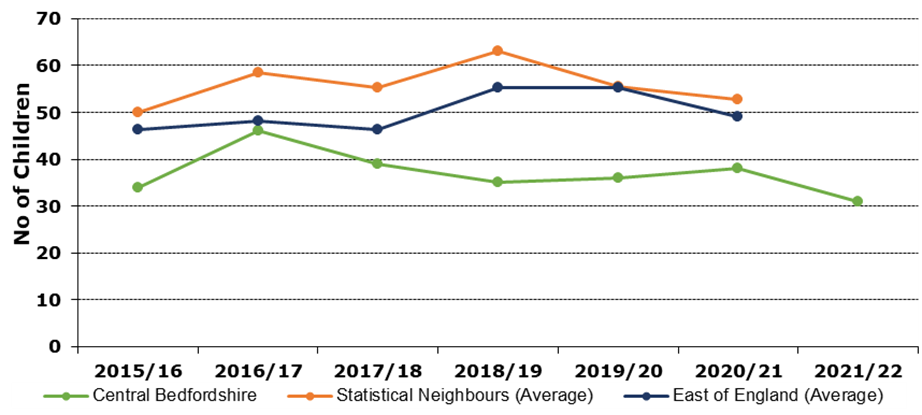
In the year ending September 2022 the UK received over 5,152 applications for asylum from children who are particularly vulnerable – having been separated from their families, might not speak English, and could have complex needs (e.g. trauma following separation, civil war, trafficking, and exploitation)[40]. The local authority has a duty to protect and support them as soon as the child becomes looked after by the local authority. An assessment of need must be carried out quickly as the opportunity to intervene may be very narrow. The latest available data in Figure 1 below shows that the number of unaccompanied asylum-seeking children in care in Central Bedfordshire (which excludes children in care in short-term placements) is lower than in the last five years, and below that of nearest neighbours, and the regional average.
Figure 1: Unaccompanied asylum-seeking children looked after in Central Bedfordshire and compared to LA (CIPFA) nearest neighbours and regional averages (Source: Department for Education[41])
In November 2021 the Home Office introduced a mandatory National Transfer Scheme which aims to reduce the number of unaccompanied asylum-seeking children waiting in hotels for accommodation and enables local authorities to share the settlement and support of these separated children nationally. Since August 2022 the quota in Central Bedfordshire has been 65, increasing from 45 the previous year, with 46 children currently supported locally. In 2022 this number was expected to rise in accordance with the mandated scheme and revised quota.
Priorities areas for action (Refugee CYP) are:
- Commitment to continue the work to ensure engagement with vulnerable children not in receipt of Free School Meals (FSM) including refugees and asylum-seeking children.
- Support refugees and asylum-seeking children and their families to engage in the Holiday Activities and Food (HAF) programme.
- Central Bedfordshire Council should continue to build long-term working relationships with local support services for separated children including the Red Cross, and the Luton Refugee centre.
Continue to improve the use of in-house accommodation options for Children Seeking Sanctuary aged 17-25, who have not yet achieved outcomes in respect of legal status. This will support stability in accommodation and provide a platform for transition during/once legal status is known.
References
[1] Page, N. (January 2024) Domestic Abuse Safe Accommodation Needs Assessment Central Bedfordshire Council
[2] Christie et al. (2023) Domestic abuse links to suicide: rapid review, fieldwork and quantitative analysis report for the Home Office University of Birmingham & West Midlands Police and Crime Commissioner
[3] Knipe et al. (2024) Suicide Rates in High-Risk High-Harm Perpetrators of Domestic Abuse in England and Wales – PubMed (nih.gov) Crisis May 45(3) 242-245
[4] Oliver et al (2019) The economic and social costs of domestic abuse Research Report 107 Home Office The economic and social costs of domestic abuse (publishing.service.gov.uk)
[5] Domestic abuse victim characteristics, England and Wales – Office for National Statistics (ons.gov.uk)
[6] For further information on Bedfordshire MARAC see: MARAC – Bedfordshire Domestic Abuse Partnership (bedsdv.org.uk)
[7] Galop (2023) “An isolated place”: LGBT+ domestic abuse survivors’ access to support – Galop (Accessed 02nd Oct 2024)
[8] Via Domestic abuse strategy | Central Bedfordshire Council (Accessed on 20 September 2024)
[9] Working together to safeguard children 2023: statutory guidance (publishing.service.gov.uk)
[10] 1001 Critical Days: The Importance of the Conception to Age Two Period | WAVE Trust
[11] https://explore-education-statistics.service.gov.uk/data-tables/characteristics-of-children-in-need
[12] Create your own tables, Table Tool – Explore education statistics – GOV.UK (explore-education-statistics.service.gov.uk)
[13] Create your own tables, Table Tool – Explore education statistics – GOV.UK (explore-education-statistics.service.gov.uk)
[14] https://explore-education-statistics.service.gov.uk/find-statistics/characteristics-of-children-in-need
[15] Create your own tables, Table Tool – Explore education statistics – GOV.UK (explore-education-statistics.service.gov.uk)
[16] See Safeguarding Bedfordshire – Central Bedfordshire Multi-Agency Safeguarding Children Arrangements (Accessed 20 Sept 2024)
[17] See Central Bedfordshire SEND Local Offer (Accessed 20 September 2024)
[18] Gov.uk, 2022. Children looked after in England including adoptions. Available at: https://explore-education-statistics.service.gov.uk/find-statistics/children-looked-after-in-england-including-adoptions#releaseHeadlines-tables [Accessed 10 May 2023]
[19] Department of Education, 2018 What works to improve the educational outcomes of Children in Need of help and protection (publishing.service.gov.uk) (Accessed 11 June 2024)
[20] LG Inform. Children in Need and Care in Central Bedfordshire. Available from: https://lginform.local.gov.uk/reports/view/lga-research/lga-research-children-in-need-and-care?mod-area=E06000056&mod-group=AllRegions_England&mod-type=namedComparisonGroup [Accessed 10 May 2023]
[21] NSPCC (2024) Looked after children | NSPCC Learning [Accessed 14 June 2024]
[22] Children looked after in England including adoptions, Reporting year 2023 – Explore education statistics – GOV.UK (explore-education-statistics.service.gov.uk) (Accessed 14th June 2024)
[23] LG Inform, 2022. Number of looked after children adopted during the year. Available at: https://lginform.local.gov.uk/reports/lgastandard?mod-metric=2248&mod-period=5&mod-area=E06000056&mod-group=CIPFA_Near_Neighbours&mod-type=comparisonGroupType [Accessed 10 May 2023]
[24] Paine et al. (2020) Early adversity predicts adoptees’ enduring emotional and behavioural problems in childhood via: Early adversity predicts adoptees’ enduring emotional and behavioral problems in childhood | European Child & Adolescent Psychiatry (springer.com) (Accessed 13th June 2024)
[25] Percentage of looked after children in Central Bedfordshire whose emotional wellbeing is a cause for concern Public health profiles – OHID (phe.org.uk) (Accessed 07th June 2024)
[26] Hospital admissions for mental health conditions up the age of 18 years Public health profiles – OHID (phe.org.uk) [Accessed 7th June 2024]
[27] Children in care immunisations as a proportion (%) in Central Bedfordshire Public health profiles – OHID (phe.org.uk) (Accessed 7th June 2024)
[28] Average Attainment 8 score of children in care in Central Bedfordshire Public health profiles – OHID (phe.org.uk) (Accessed 7th June 2024)
[29] Children looked after in England including adoptions, Reporting year 2023 – Explore education statistics – GOV.UK (explore-education-statistics.service.gov.uk) (Accessed 13th June 2024)
[30] Foley et al. (2023) Support for care leavers: House of Commons Library Briefing CBP-8429.pdf (parliament.uk)
[31] Homelessness statistics – GOV.UK (www.gov.uk) (Accessed 13th June 2024)
[32] Gov.uk. Children looked after in England including adoptions, 2022. Available at: https://explore-education-statistics.service.gov.uk/find-statistics/children-looked-after-in-england-including-adoptions [Accessed 10 May 2023]
[33] Gov.uk. Children looked after in England including adoptions. Available at: https://explore-education-statistics.service.gov.uk/find-statistics/children-looked-after-in-england-including-adoptions [Accessed 10 May 2023]
[34] Central Bedfordshire Council data
[35] The Children’s Society, 2013. Hidden from View: The experiences of young carers in England. Available at: https://www.childrenssociety.org.uk/sites/default/files/2020-10/hidden_from_view_final.pdf [Accessed 02 October 2024)
[36] Census 2021. Provision of unpaid care by age. Available at: https://www.nomisweb.co.uk/datasets/c2021rm113 [Accessed 17 Jan 2024]
[37] The Children’s Society, 2013. Hidden from View: The experiences of young carers in England. Available at: https://www.childrenssociety.org.uk/sites/default/files/2020-10/hidden_from_view_final.pdf [Accessed 10 May 2023]
[38] See Young carers | Central Bedfordshire Council (Accessed 14 June 2024)
[39] Refugee Council (2024) The truth about asylum – Refugee Council
[40] Refugee Council (2024) Facts about separated children – Refugee Council
[41] Number of unaccompanied asylum seeking children looked after in Central Bedfordshire | LG Inform (local.gov.uk) (Accessed 20 Sept 2024)